
Science has always depended on collecting and understanding data, but modern scientific research now produces more information than humans can realistically analyze by hand. Coding allows scientists to organize, filter, graph, and interpret massive datasets quickly and accurately. Programs like RStudio help researchers transform raw information into understandable patterns, making coding one of the most valuable tools in modern scientific fields.


One of the greatest strengths of coding is organization and data manipulation. Functions like mutate, rename, and filter allow scientists to clean and structure data efficiently. In environmental science, biology, or climate research, datasets often contain thousands or even millions of measurements collected across years or decades. Coding makes it possible to sort information by dates, locations, species, or environmental conditions within seconds instead of manually searching through spreadsheets.
Coding is also extremely useful for visualization and statistical analysis. Scientific patterns are often difficult to understand when looking only at raw numbers, but programs like ggplot allow researchers to convert data into graphs and figures that clearly display trends over time. Scientists can compare variables, group data into categories, calculate averages, and identify patterns that may otherwise remain hidden. These visualizations are essential in fields like ecology, genetics, neuroscience, meteorology, and public health because they help researchers communicate complex findings more effectively.
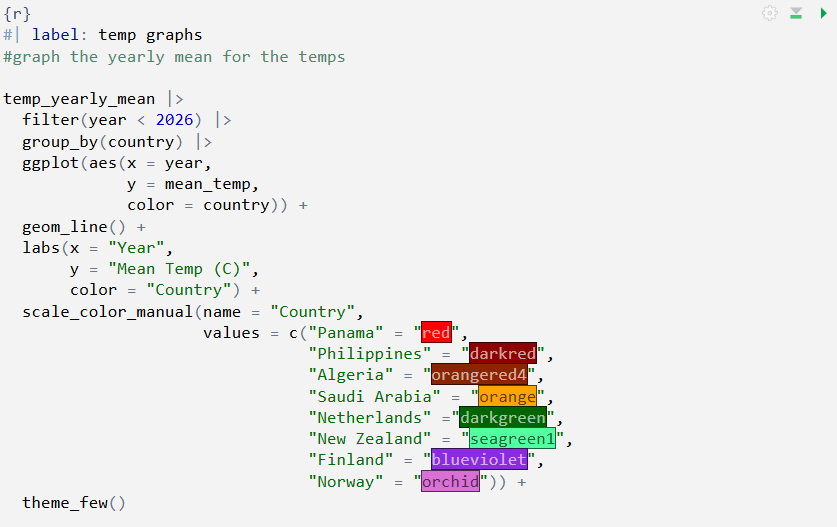
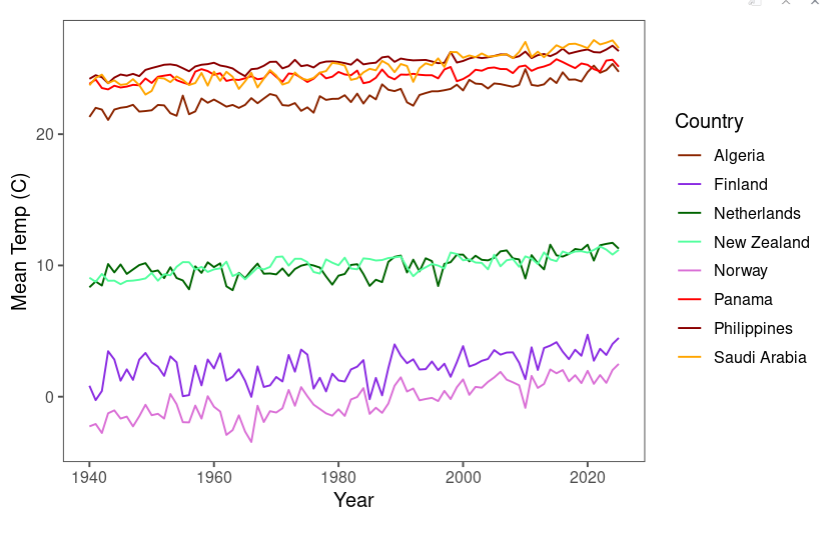
Another major advantage of coding is reproducibility. Scientific research depends on the ability to repeat methods and verify results. Coding creates a step-by-step record of exactly how data was processed and analyzed. Instead of manually editing spreadsheets where mistakes can easily occur, scientists can rerun the same code and reproduce the same results consistently. This improves accuracy, transparency, and reliability in research.
Days till 2050
Day(s)
:
Hour(s)
:
Minute(s)
:
Second(s)
As scientific fields become increasingly data-driven, coding is rapidly shifting from a specialized skill to a core scientific tool. Whether studying climate change, disease outbreaks, ecosystems, or genetics, scientists now rely on coding to manage information, perform analyses, and communicate discoveries. This is especially important as the world works toward reaching net zero carbon emissions, a goal that depends heavily on scientific data and technological innovation. Scientists use coding to track global temperature changes, model future climate scenarios, analyze renewable energy systems, and monitor carbon emissions across ecosystems and industries. In many ways, coding has become one of the most important tools humans have for understanding environmental change and developing solutions for a more sustainable future.